Wind-Assisted Propulsion: Lift, Not Nostalgia
Rotor sails, wingsails, suction wings and kites all work the same way: they turn lift into forward thrust. The saving depends on the route as much as on the hardware, and regulation now pays a premium on the proven figure.
Wind is back on merchant ships. Not as a return to square rig, but as auxiliary power. The main engine stays, sized for calms and schedules; the wind device sits on deck and shaves load off the propeller whenever the weather cooperates.
This is the second article of our energy-saving series, and the first deep dive: the harvesting family, the only one that brings new energy aboard instead of wasting less of the old.
Lift, not drag
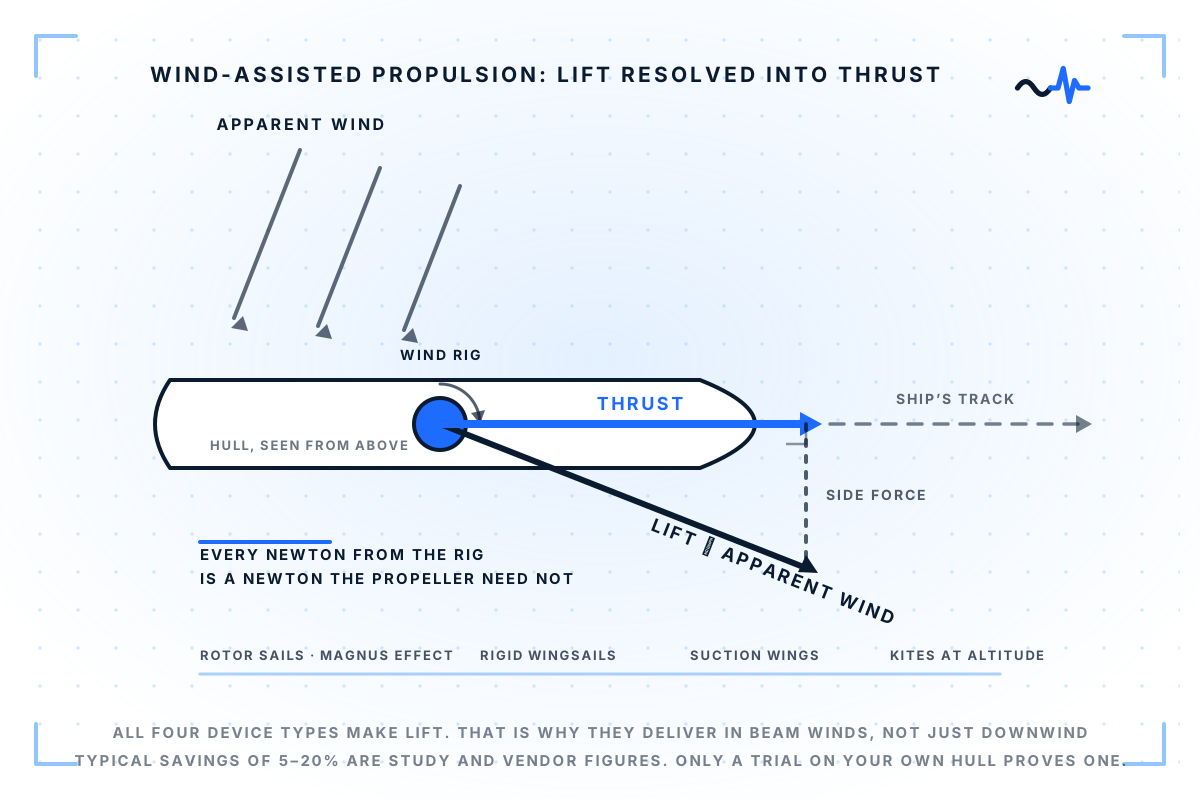
A device that simply catches the wind only helps when the weather blows from well behind the beam. Every serious modern system works the way a yacht beating to windward does: it generates lift, an aerodynamic force at right angles to the apparent wind, meaning the wind the ship actually feels, the true wind combined with the breeze of her own motion. Because that apparent wind arrives from forward of the beam, the right-angle force does not point straight across the ship: it tilts ahead of her. Part of it therefore acts along the ship's track and pushes her forward, and the rest is side force, which the hull and rudder take. That is how a mostly sideways force still moves a ship along her course. Lift devices produce useful thrust across a wide range of wind angles, including beam winds, wind roughly from the side, and beam-ish wind is most of what a real route offers.
Every newton of thrust the device delivers is a newton the propeller need not, and the engine throttles back accordingly. That is the entire saving mechanism; everything else is detail.
Four shapes of the same idea
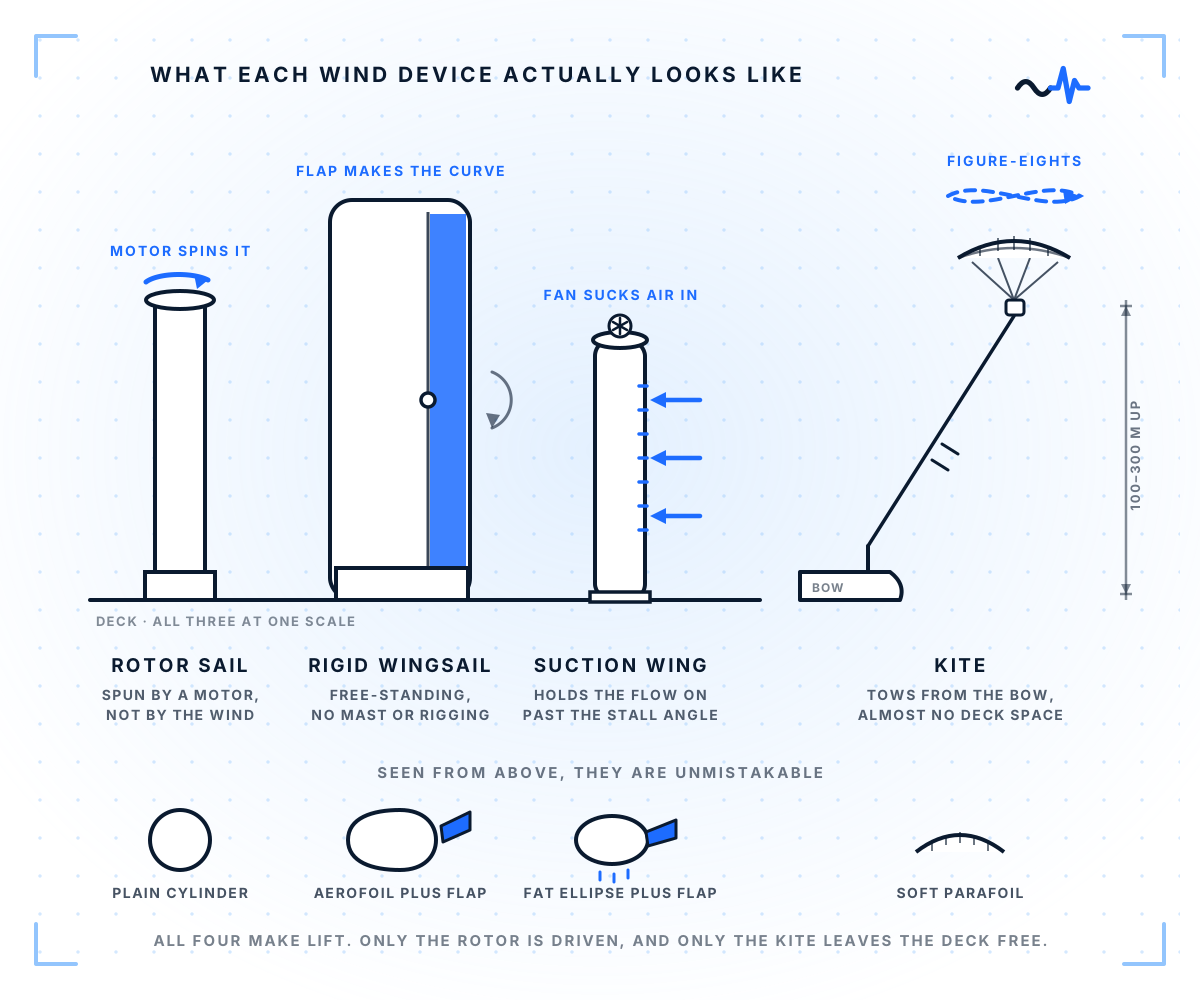
Rotor sails are spinning vertical cylinders. Rotation drags air around the surface, speeding the flow on one side and slowing it on the other. The resulting pressure difference is lift, and this way of producing it is known as the Magnus effect. Striking force from a small deck footprint, controlled by a single number: spin speed. The spin motors consume power, so honest accounting is net of that draw.
Rigid wingsails are vertical aircraft wings with flaps or camber control. Aerodynamically efficient and mechanically simple, but tall fixed structures. Air draught under bridges, shadowing between multiple wings and interference with cargo gear are the binding constraints; tilting and furling designs exist to buy them back.
Suction wings are short, thick wings with fans drawing air through a perforated skin. The suction holds the flow attached to the wing at angles where a plain wing would stall, that is, where the flow would break away and the lift collapse. Very high lift for their size (useful where deck length is scarce) at the price of the power the fans draw, a parasitic load that comes off the saving.
Kites fly from the bow at several hundred metres, where wind is stronger and steadier than at deck level, flying figure-eight patterns that multiply their apparent wind. Deck footprint near nil; launch, recovery and flight control carry the complexity instead.
None of them asks the crew to sail. Modern installations trim themselves (spin speed, flap angle, suction, flight pattern) and shed thrust automatically for squalls and port approaches. The bridge gets a status display, not a sail plan. More than a hundred ships already sail with wind-assist installations: a classed, insured, financed population. The concept stage is over.
The route is half the machine
Now the number the CFO wants, and the reason the brochures cannot give it. A wind-assist saving is not a property of the hardware. It depends on the hardware, the route and the operating profile together. Typical figures for sensible installations run 5 to 20%, and the width of that range is the point. A trade running the North Atlantic westerlies feeds a rotor strong, frequent beam winds; an equatorial liner run through the doldrums feeds it much less. Slower ships gain more, relatively: the same newtons offset a larger share of a smaller propulsion power. A percentage quoted without the route it came from tells you nothing about your own: it is quoting someone else's weather.
Be clear about what that band actually is. The 5 to 20% figure comes from published studies and vendor projections; it is not a measurement of your ship. Nobody can tell you what a rig will return on your trade until it has been trialled on your own hull and then tracked in service across seasons and loading conditions. Until that happens the number is a hypothesis, however confident the brochure sounds. It belongs in a business case with a range and an assumption list attached, not as a single percentage.
The proof has an instrument now. The ITTC, the international body that writes towing-tank and sea-trial standards, adopted a dedicated procedure for measuring wind-assist power savings. It calls for comparative runs with the system active and inactive under documented conditions, producing a figure both parties can audit in a charter negotiation. The lasting proof comes after, in normalised in-service monitoring that separates the wind's help to the rig from the wind's added resistance to the hull. Without that separation, a stormy quarter will flatter the sail and a calm one slander it.
Regulation then pays a premium on the proven figure. Under FuelEU Maritime, a wind share of propulsion power above 5, 10 or 15% multiplies the ship's attained GHG intensity, the greenhouse gas released per unit of energy the ship uses, by 0.99, 0.97 or 0.95. At the deepest tier that is a flat 5% regulatory discount stacked on top of the fuel the rig already saved. The wind contribution also enters the EEXI calculation, the design-efficiency index every existing ship has to meet, and every tonne not burned improves the CII rating, the annual operational carbon-intensity grade.
Would a rotor sail pay on your busiest route, and do you know that route's wind statistics well enough to answer?