What we teach

From raw sensor data to a number you can defend.

Four subjects, one thread: the methods practised daily, written down as papers and articles, and taught in the Blue Autonomy Academy.

Data foundation

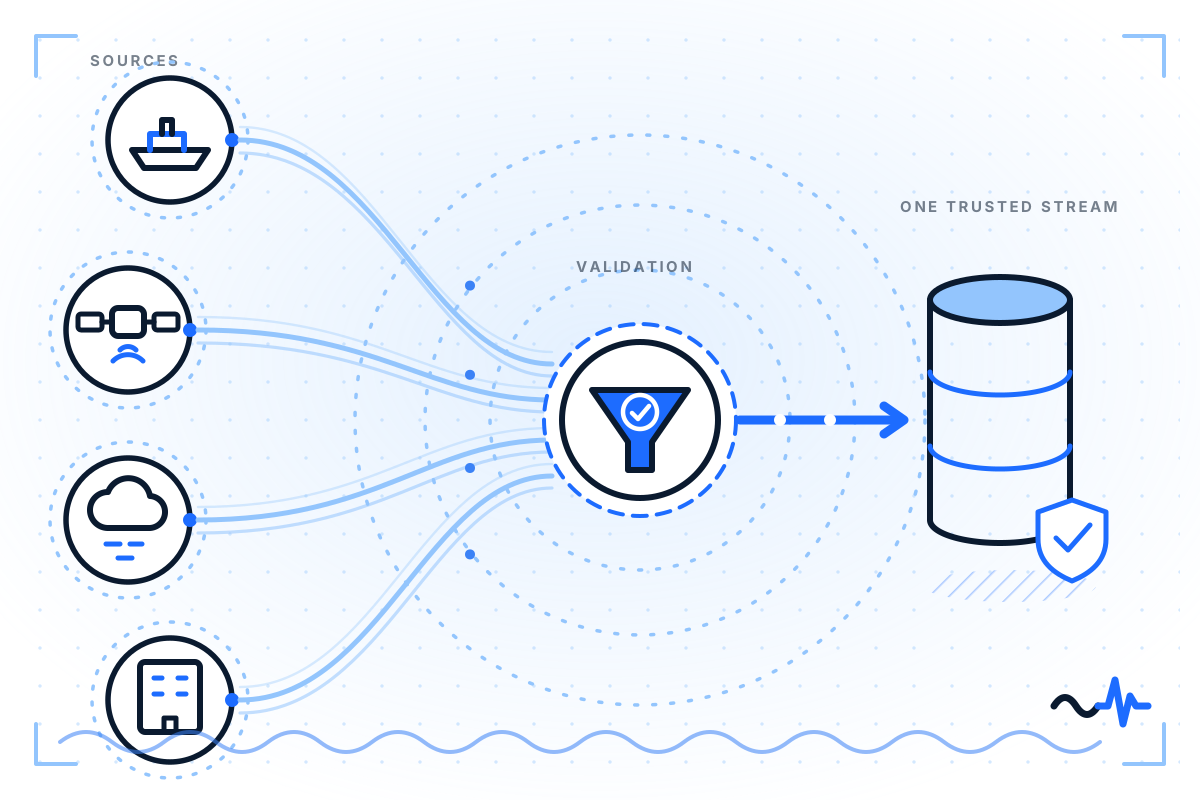
Every analysis stands or falls on the data underneath it. Before any model or report is worth reading, the data has to arrive, be checked, and be stored so it can be trusted. It is the least glamorous subject in ship performance and the one most results quietly depend on, which is why the Academy gives it a sequence of its own.

Schematic: data from ship, satellite, weather, and office sources passing through validation into one trusted stream

Data integration & management

Vessel data arrives from a dozen incompatible sources (shipboard systems, third-party providers, shore-side databases), each with its own format, frequency, and failure modes.

What the subject covers

  • How shipboard systems, third-party providers and shore-side platforms exchange data, and what interoperability actually requires
  • Validation and consistency checks, and how an anomaly is told apart from an event
  • Schema design for high-frequency vessel and sensor data: keys, indexing, referential integrity
  • Keeping a data estate alive: backups, restore testing, archiving
Data pipeline

Between a sensor reading and a decision sits a pipeline: acquisition, quality assurance, filtering, transformation. Skip a stage, and the model downstream quietly learns from bad data.

What the subject covers

  • Filtering that removes noise while preserving the signal, and how to defend the window you chose
  • Continuous sensor-drift and stuck-value detection, flagging or discarding faulty measurements
  • Cross-parameter correlation checks against physical and engineering principles
  • Model-based sanity checks on derived metrics (speed-power curves, efficiency indices) before anything reaches an analysis

Vessel performance

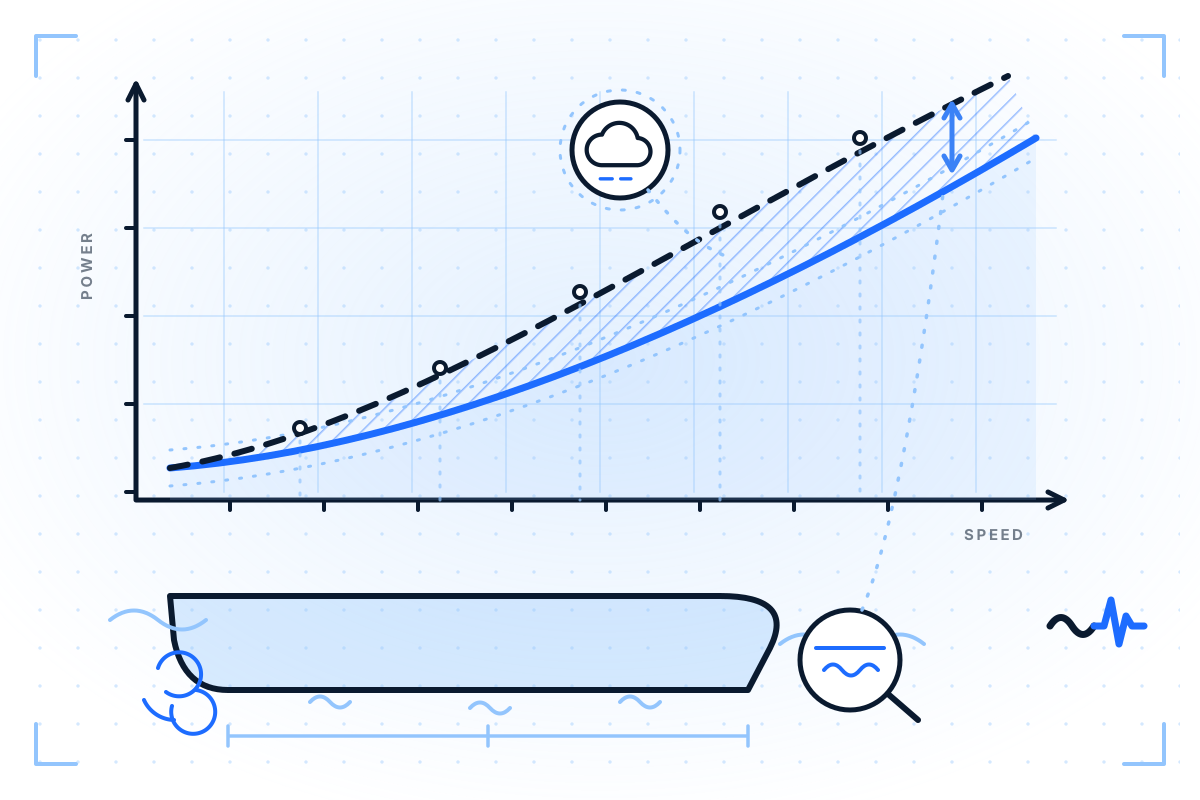
Predicted and actual ship performance rarely agree. The gap has measurable causes (fouling, weather, engine condition, design assumptions), and finding them is the difference between guessing and knowing. ISO 19030, hull and propeller condition, speed-power baselines: fifteen years of doing this daily is what the Academy's performance sequences are built from.

Schematic: expected versus actual speed-power curves diverging above a ship hull, with weather and fouling indicated as causes

Performance monitoring

A hull, propeller, and engine deliver what they deliver. The question is what they should deliver, and what explains the difference.

What the subject covers

  • The ISO 19030 method end to end: baselines, the filter chain, the four indicators, and the uncertainty that belongs beside each
  • Weather effects: what wind, waves, and currents cost in power and fuel, term by term
  • Digital twins: what it means to simulate an expected operating state, and what it takes to trust one
  • Machine-learning models for fuel consumption: what they buy over physics, and what they cost
  • Main engine and auxiliaries read against shop-test and sea-trial references

Engineering studies

When performance deviates from prediction, someone has to explain where it went, with evidence, not opinion.

What the subject covers

  • Reading a sea trial and a model test: propulsion efficiency and resistance factors, compared properly
  • Sister-vessel comparisons on consistent datasets
  • Deviation studies that attribute the gap between predicted and delivered performance
  • Naval-architecture methods applied to operational data: the physics keeps the statistics honest

Compliance & charter party

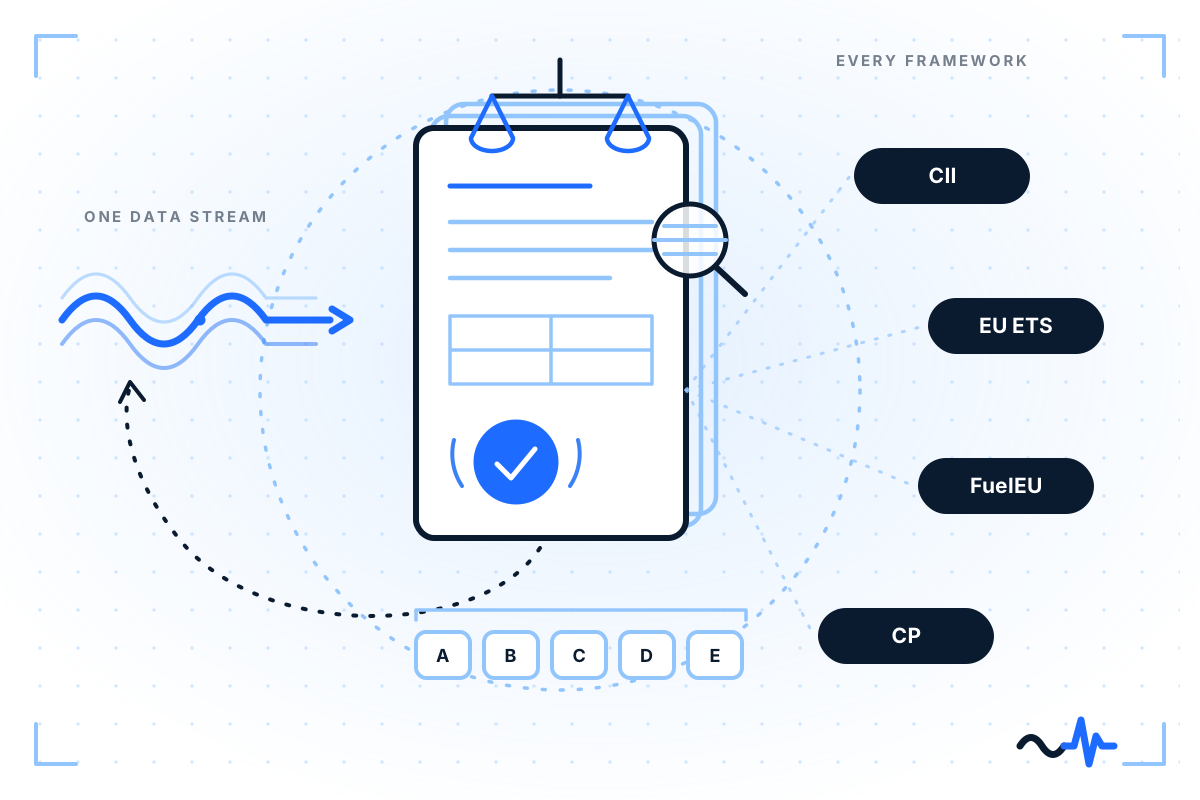
CII, EU ETS, FuelEU, charter party terms: each turns operational data into a number with real financial consequences. Those numbers must hold up when a verifier, authority, or counterparty pushes back. The Academy teaches them as worked arithmetic rather than policy: one voyage's fuel followed through every regime that prices it, and a charter-party warranty taken apart clause by clause.

Schematic: one data stream feeding a verified report, with CII, EU ETS, FuelEU and charter party frameworks alongside

Environmental compliance

A compliance figure is only as good as the data behind it, and it's the shipowner who answers for it.

What the subject covers

  • Which parameters an emissions figure actually rests on, and the data-quality checks that protect them
  • IMO DCS and CII: how the figures are calculated, and what moves a rating
  • EU ETS: from reported emissions to EU Allowance (EUA) quantities
  • FuelEU Maritime: the GHG intensity of the fuel consumed, and how a balance is kept

Charter party adherence

When a vessel under- or over-performs against charter party terms, the difference is money, and often a dispute.

What the subject covers

  • Gain and loss in time and consumption, worked leg by leg
  • What CP speed, consumption, and good-weather terms actually promise, and which days a clause lets you measure on
  • Weather normalisation that both owner and charterer can accept
  • Why a CP table is only as good as the speed-consumption relationship underneath it

Where it is taught. Performance and the Money (3 courses) · Maritime Decarbonisation & Compliance (5 courses)

Reporting & AI

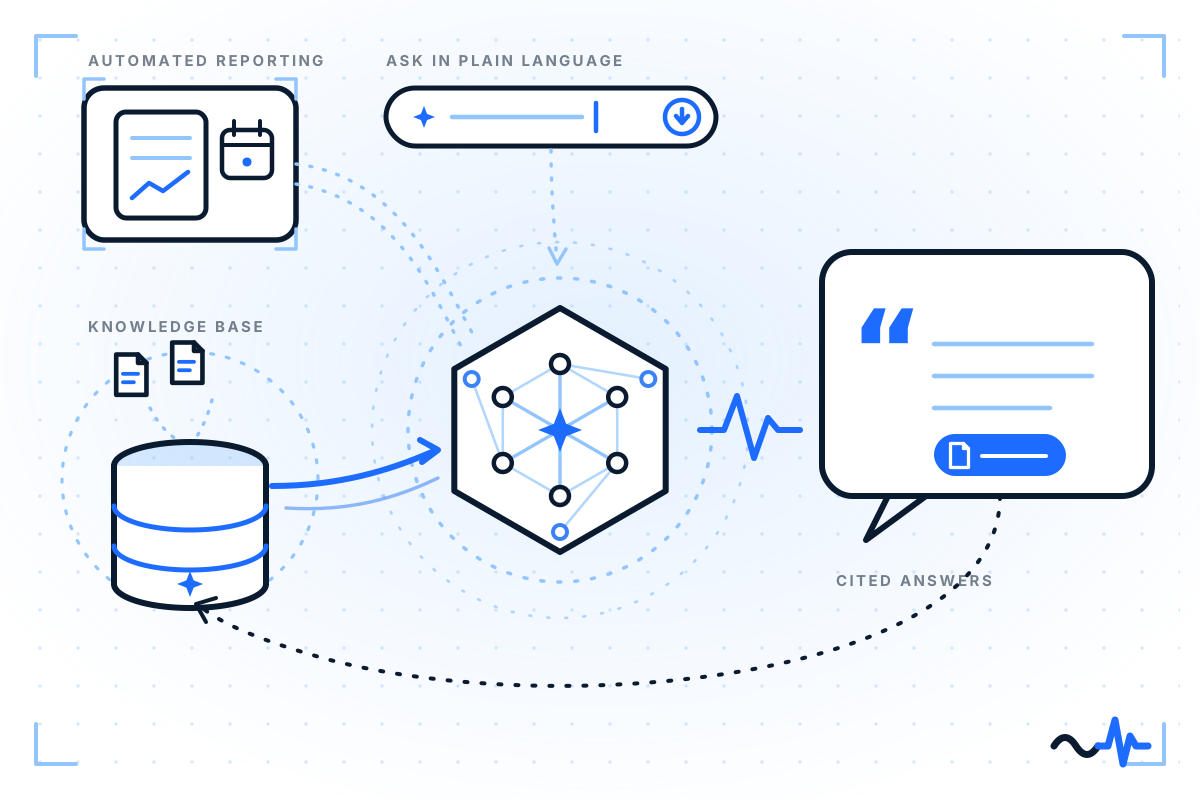
Most fleet data is examined only after something has gone wrong. The last subject is how data is made to speak up on its own (routine reports for the expected, alerts for the exceptions, and answers on demand), and how to judge a model before a decision is taken on its output. Most of this is written up as articles and talks; the modelling is taught in the Academy.

Schematic: routine data becoming reports, exceptions becoming alerts, and questions receiving answers with citations

Automated reporting & alerting

The signal is in the data days before it reaches a meeting.

What the subject covers

  • Which operational, compliance, and technical KPIs deserve a schedule: daily, weekly, or per voyage
  • Designing a report that spotlights deviations and emerging trends instead of burying them in tables
  • Alerting on abnormal behaviour (speed deviations, route changes, drifting, out-of-range parameters) without drowning the reader in false alarms

AI documentation

Technical manuals, class certificates, and procedures hold answers crews need in seconds, not after an hour of searching PDFs.

What the subject covers

  • What a searchable knowledge base across manuals, certificates, and procedures has to get right
  • How retrieval-augmented AI works, and why an answer with citations is the only kind worth trusting
  • Version control and revision tracking: keeping an answer aligned with the document currently in force
  • Where these assistants fail, and how to test one before relying on it

Talks, webinars and the Academy

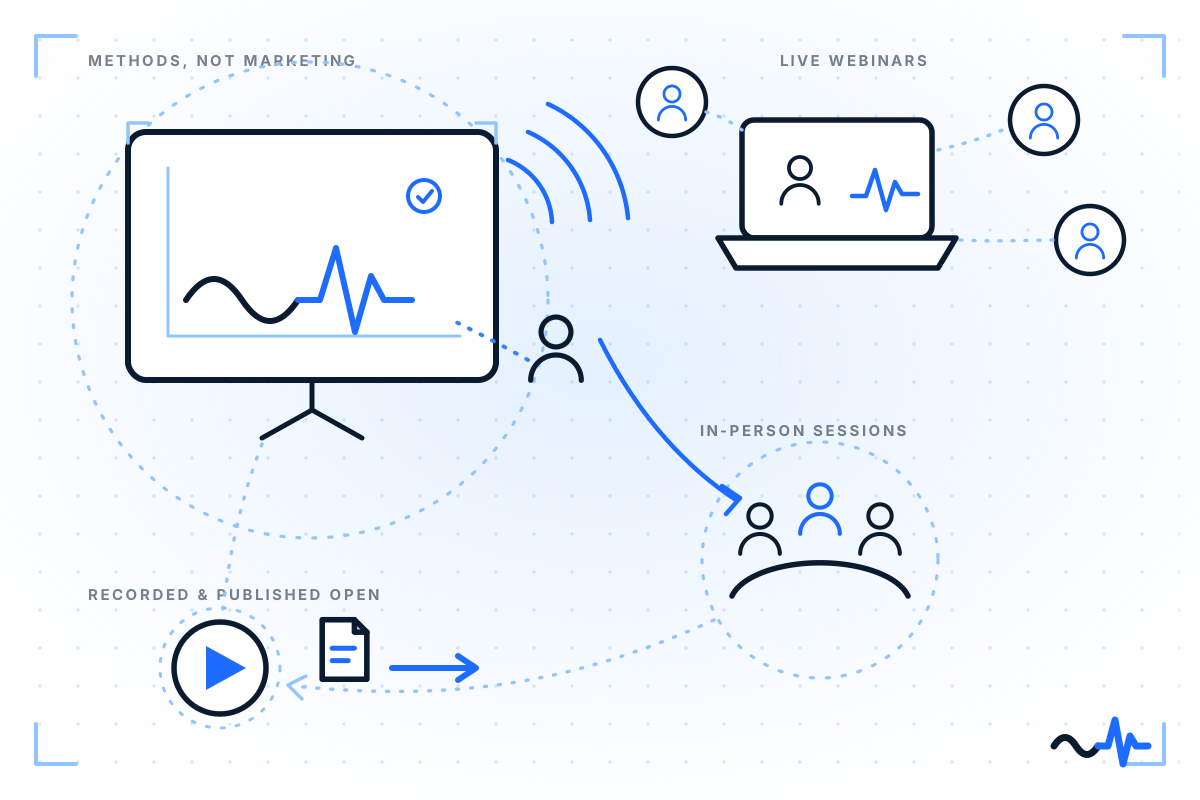
Open educational sessions for the maritime industry, on the same methods, findings, and hard-won lessons published here as papers and articles. They cover general methods rather than any one attendee's fleet, every session is recorded and published afterwards, and nothing is sold in them. The speaker is Christos Papandreou, Chief Scientific Officer at NEMO and founder of Blue Autonomy. The Academy is where the same material is taught in full.

Schematic: open seminars and webinars: live sessions, in-person events, recorded and published afterwards; methods, not marketing

What We Cover

Vessel performance (ISO 19030, hull & propeller condition), maritime data quality and pipelines, environmental compliance (CII, EU ETS, FuelEU), and how physics-based and AI models actually work, explained in plain terms.

Formats

Online courses, and in-person sessions at conferences and industry events. Every session is recorded and published afterwards, so nothing said in one is available only to the people who were in the room.

Who They're For

Shipowners, operators, fleet-performance and technical teams, and anyone who wants to understand the numbers behind decarbonisation and efficiency, rather than just read a dashboard.

New sessions are announced on LinkedIn and through our RSS feed; past ones are published as recorded talks.

The Academy is open now →

Learn it properly in the Academy

Self-paced courses on these four subjects, grouped into sequences that build in the order the knowledge does. Free courses are open in full with no account; paid courses open their first lesson free as a sample.

Vessel Performance Analyst I: Measuring Performance · Vessel Performance Analyst II: The Hull in Service · Performance and the Money · Performance Data Science · Ship Technology Foundations · Propeller & Propulsion · Added Weather Resistance · Energy-Saving Devices in Depth · Maritime Decarbonisation & Compliance

Browse the Academy